Going offline and opening new retail stores/flagship stores/experience stores/pop-up stores has become a common practice for many global brands: from overseas giant Amazon’s Amazon go, domestic Hema O2O, to classic DTC brands Warby Parker and Allbirds’ offline physical stores that are popping up everywhere. What makes global DTC brands go offline one after another?
1. Let’s first talk about the past and present lives of DTC brands.
More than a decade ago, Digital Native allowed a number of cutting-edge brands to break platform monopoly and thrive amidst the explosion of social media dividends, reaping a wave of differentiated opportunities in the era.
For detailed information, please read this article:
From DNVB to DTC - 5,000 words to explain the past and present of the DTC model
But now it seems that digital nativeness may be the gene engraved in the bones of DTC brands, but genes cannot affect the acquired growth environment. From the bottleneck of online customer acquisition growth and the high cost of customer acquisition to the immersive experience of offline physical stores, omni-channel and omni-regional operations have become the new pursuit of DTC brands - they are embracing Omnichannel.
On the other hand, the nature of human social life forces pure online to compromise with offline. Especially when the dividends of the Internet are exhausted and the novelty and excitement of online has passed, consumers find that they still need to face-to-face, and brands also find that they need to face-to-face with consumers. After all, offline is still a necessity for global DTC brands. In the era of digital marketing, its value is not only reflected in customer experience and brand image, but also a new breakthrough on the growth side of brand marketing.
2. New retail stores: a panacea for customer experience
No matter how perfect online is, it cannot replace offline. As a supplement to the customer experience and services of many enterprises, offline is indispensable. From a consumer perspective, we are all real people, not robots. Although Internet information technology is highly developed and facilitates our production and life, it can never replace personal interaction between people.
Under the new coronavirus epidemic situation, people's desire for offline is the best proof. Therefore, based on the basic needs of consumers, even if offline stores do nothing, standing in a street mall is a comfort to customers' brand ownership. Not to mention, with the entire service industry in turmoil, many companies are pursuing the ultimate service and ultimate experience. As one of the best, new retail stores naturally have a lot of say.
3. Implementation and strengthening of brand image
As mentioned above, new retail stores will provide each customer with practical services and experiences from the moment they enter the store. Behind these experiences, the brand image is strengthened and the brand mind is shaped. Bubble Mart's blind box opening activities and the try-on experience in Bonobos stores can make consumers' memories more profound through personal experience.
Warby Parker blue and the liveliness and playfulness of Bubble Mart stores can make customers remember the brand through experience, and promote purchases and repurchases online or offline in the future.
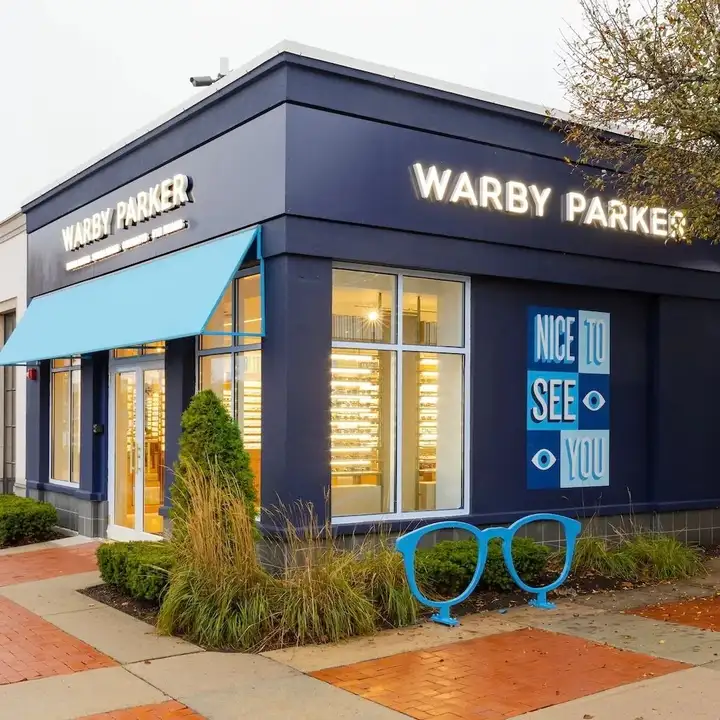
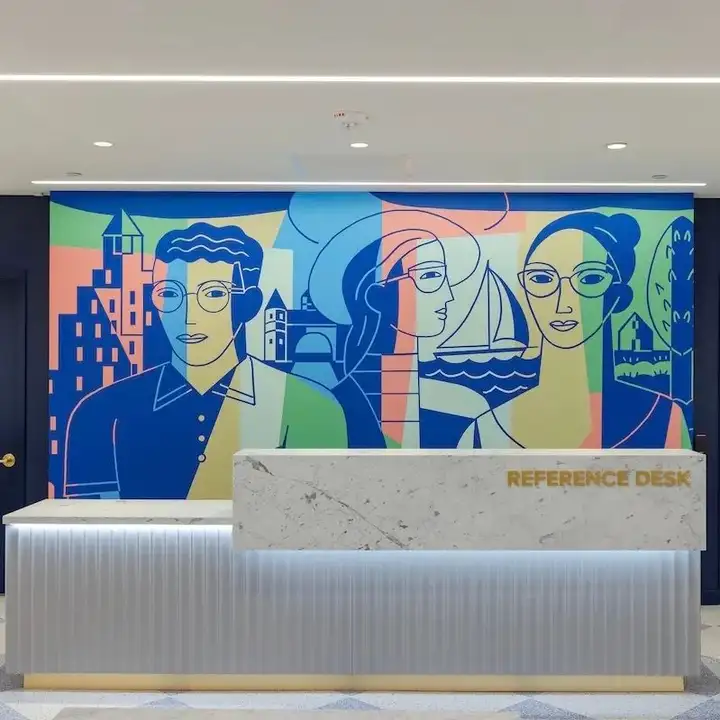
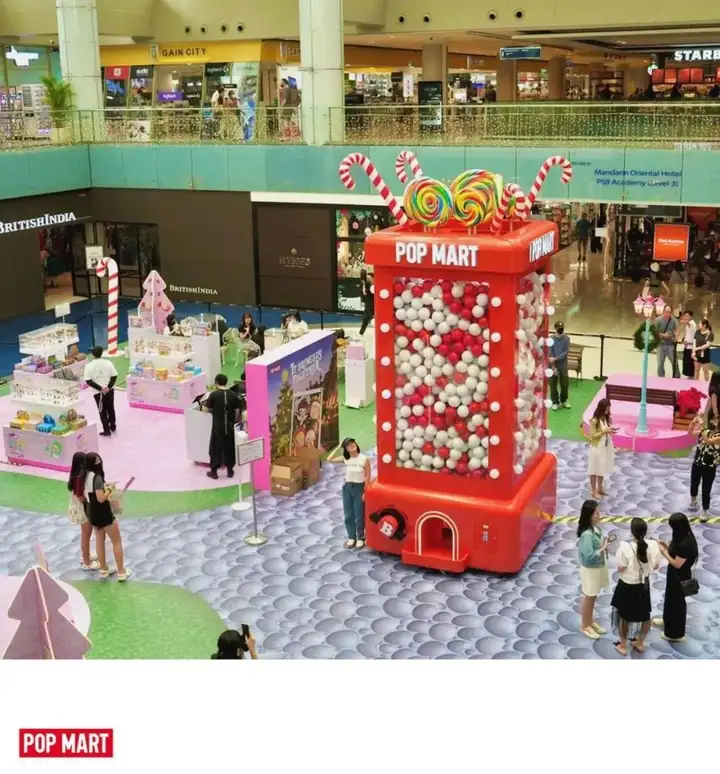
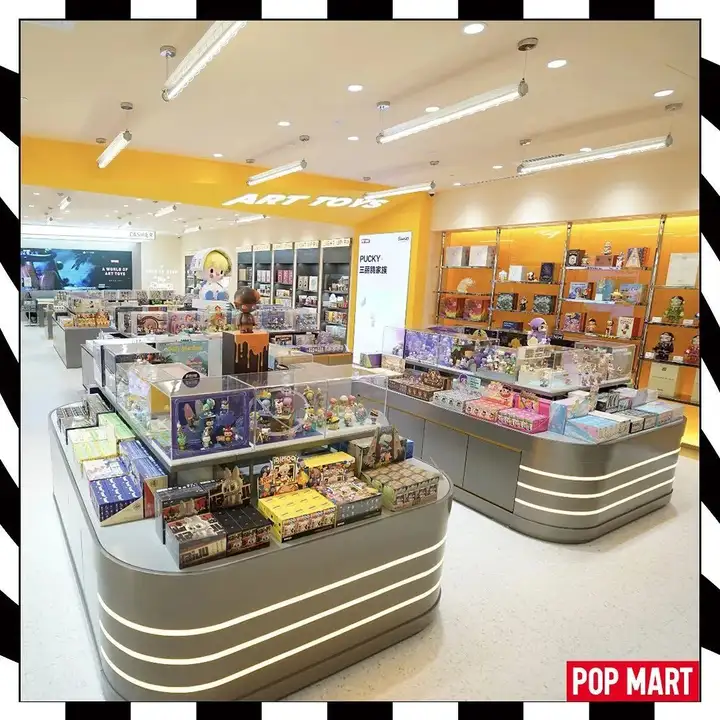
Every display in a physical store conveys the tone and value of the brand. Under the strong visual impact, the brand image and personality will also be conveyed to consumers and enter their memories quietly.
4. Brand community + customer feedback
In addition, humans as consumers have another characteristic: social animals. Human beings need to socialize, communicate, and meet. The special value of offline stores is also an excellent venue for meeting and social activities for people in the same circle. Because of the same hobby, they can gain social recognition and a sense of belonging in the store, and build connections. This is also an opportunity to build a brand community, where social communication can be done online and face-to-face gatherings can be done offline, achieving the unity of product and effect in the brand community.
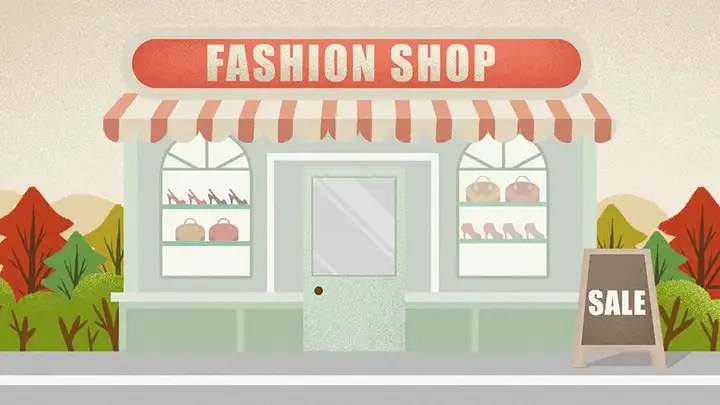
On the other hand, offline stores can also obtain customers’ first-hand real feedback and needs. In terms of customer listening and demand collection, offline physical stores can provide feedback and optimization suggestions for the brand's middle and back offices.
5. Customer retention and marketing growth
As one of the sources of DTC brand marketing growth, new retail stores are also playing an increasingly important role in this aspect. In the era of Retail 4.0, the digitalization of each new retail store does not stop at the back-end purchase, sales, inventory and goods management. It also takes two key actions on the front-end marketing side to promote customer retention and marketing growth.
First: Offline users go online
In short, we do not let go of every precise customer who enters the store, and allow customers to establish a digital connection with the shopping guide/store/brand on the front end. And the best carrier for this kind of digitalization is naturally social tools. In China, WeChat and WeCom are used as carriers, and stores use gifts/discounts/after-sales as introductions. Digital connections can be established with every customer who enters the store through friends or communities.
This small step can be said to be of great significance. In terms of customer experience, you can obtain store and product information when leaving the store/restoration, etc. You can also learn some service information (such as after-sales service, logistics notifications, etc.), which is extremely easy and convenient. For the stores and shopping guides themselves, they also use social tools to retain accurate contact information for in-store customers. Regardless of whether customers buy now or not, in future marketing activities, discounts and promotions can be continuously released to encourage customers to place orders or repeat purchases.
Targeting overseas, you can also use WhatsApp (the social instant messaging IM tool with the largest number of users in the world) to retain every customer who enters the new offline retail store.
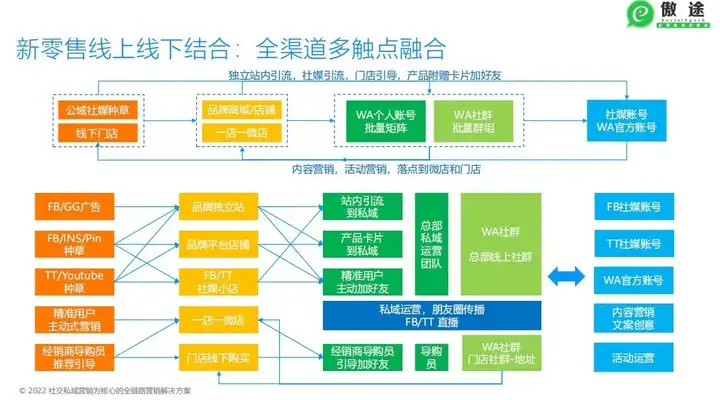
Second: Online users are owned channels
After retaining customer data, how to promote purchase, repurchase or even referral? This is another big topic - owned-channel operations. The goal of owned-channel operations is to fully tap the lifetime value and social value of customers, that is:
Let every customer buy;
Let each customer buy more and last longer;
Let each customer recommend others to buy after buying.
At this stage, the company will enter the critical stage of owned-channel operations to promote conversion. Low unit price and high repurchase can promote multiple customer conversions, while high unit price and low repurchase can speed up the efficiency of customer conversion. Whether it is B2B or B2C, fully tapping customer value through owned-channel operations can empower companies to reduce costs, increase efficiency, and grow marketing.
Of course, the online business of new retail stores is not only the digital connection of customers and owned-channel operations, but also can meet customers' immediate purchase needs when customers leave the store/store is on vacation, extend the time of shopping guides and store services, and expand the scope of services.
At this stage, management of people and goods, internal collaboration between people, and social communication between customers and shopping guides are required. Taking China as an example, the combination of WeChat-based mini-program micro-stores and WeCom is the perfect carrier. For overseas markets, the combination of WhatsApp SCRM and social fission-style micro-stores is also an ideal choice.
In this way, online and offline collaboration forms the enterprise's O2O global business system.
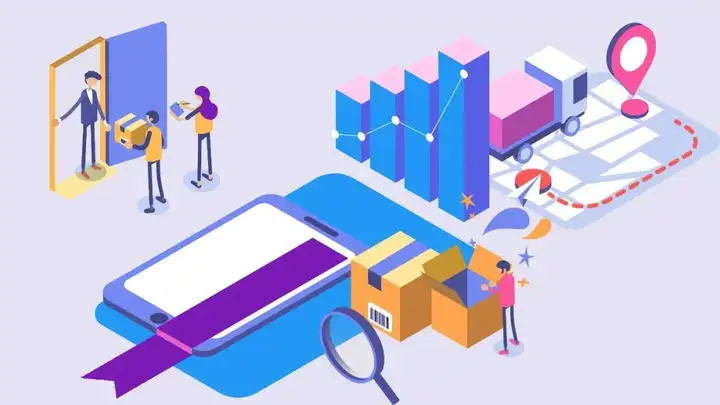
Summary: As cross-border e-commerce turns to brand global expansion, offline is no longer a supplement to customer experience and brand image. Empowered by the social new retail owned-channel operations system, new retail stores are also powerful channels for building brand communities, connecting customers, and promoting marketing growth.