Cross-border e-commerce traffic dividends have peaked, and bringing public customers to WhatsApp communities for owned-channel operations has become the key to improving customer stickiness and reducing customer acquisition costs. However, many sellers have clearly established a group, but they face the dilemma of "the group is complex and difficult to manage, and the interaction is sluggish and there is no conversion." In fact, the core problem is: the lack of efficient operating methods and tool support has led to the community becoming an "advertising group" and a "dead group".
The core of a WhatsApp community that can truly achieve high conversion is "accurate screening, efficient management, and value output." Below I share a set of practical tips for customers, combined with practical tools to make community operations more worry-free, and open up the conversion link in the entire process from group establishment to repurchase.
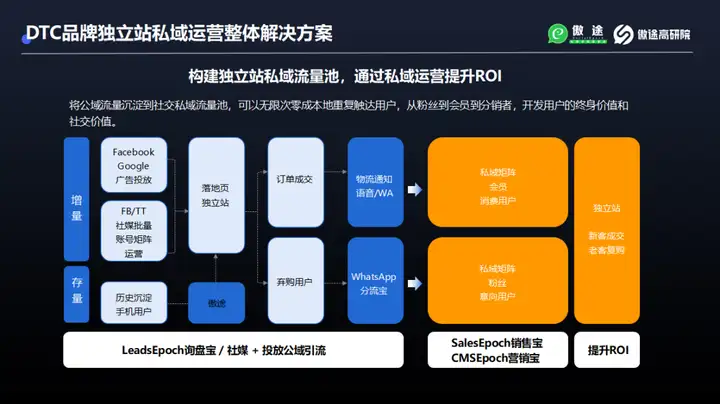
1. Precise group building: gathering customers in batches and screening high-intention groups
The prerequisite for community transformation is "accurate crowds". Blindly recruiting people will only dilute the value of the community. First of all, it is necessary to clarify the positioning of the community, such as "new product experience group", "old customer exclusive group" and "regional customer group", and then guide customers to actively join the group through independent station pop-ups, order packages, social media traffic and other channels.
In order to improve the efficiency of group building, you can use the batch import group function to join precise communities with one click, eliminating the tedious step of adding them one by one. At the same time, through the function of extracting group members, high-value customers with frequent interactions and purchase records can be screened out from the general traffic group, and a separate VIP group can be established to conduct refined operations and make the conversion of core customer groups more concentrated.
After establishing a group, remember to set clear group rules, such as "no irrelevant ads, screen spam, and automatic kicking of people who violate rules." Maintain the community environment from the source, and combine functions such as one-click @all members to avoid confusion in later management.
2. Efficient management: Automation tools free up manpower and focus on core transformation
The most energy-consuming part of community operation is "trivial management", such as cleaning up advertisements, responding to repeated inquiries, and counting interaction data. If you want to focus on conversions, you must use tools to achieve automated management.
Using the automatic group management function, keyword rules can be preset. For example, if illegal content such as "advertisements" and "QR codes" are detected, warnings or kicking operations will be automatically triggered, eliminating the need for manual supervision and keeping the community pure.
For sellers who operate in multiple groups, the batch management function can greatly improve efficiency, such as synchronizing activity information with one click and sending benefit notifications with preset phrases. There is no need to manually operate each group one by one, saving a lot of time and cost, allowing operators to focus on communicating with high-intention customers and promoting conversions.
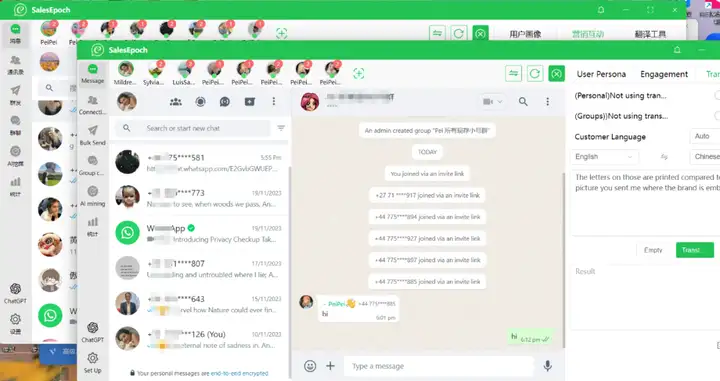
3. Activate interaction: value output + precise reach to improve customer stickiness
If a community wants to be transformed, it must first be active; if it wants to be active, the core is "continuous output of value." In daily operations, the content can be planned according to the ratio of "3:2:1": 3 pieces of practical information (such as product usage tips, cross-border shopping pitfall guides, local logistics timeliness inquiries), 2 pieces of interactive topics (such as "What is the popular item you most want to repurchase?" "What products are more needed for local festivals?"), 1 piece of welfare activities (such as limited-time discounts, cash rebates for orders).
Interactive topics should be designed based on the characteristics of the target market. For example, you can talk about festival customs for Southeast Asian customers, and you can talk about product matching for European and American customers. At the same time, with the help of the scheduled sending function, it can adapt to different regional time zones and push content during peak customer activity periods, eliminating the need to stay up late and get stuck. For dormant customers, targeted push messages can be used to wake them up, such as sending exclusive coupons to guide them to participate in interactions and place orders for consumption.
4. Conversion to repurchase: simplified path + hierarchical operation to amplify customer value
The key to community transformation is “lowering the decision-making threshold + accurately reaching needs”. When promoting products within the community, it is necessary to include links that jump directly to the product page so that customers can click to place an order and shorten the conversion path. At the same time, stratification is carried out based on customer consumption records and interaction frequency:
- High-value VIP customers: push exclusive discounts, priority purchase rights, and customized services to increase repurchase rates;
- Ordinary repurchasing customers: push new product previews and full discount activities to stimulate repeated consumption;
- Potential customers: Push trial package benefits and entry-level product discounts to guide first-time orders.
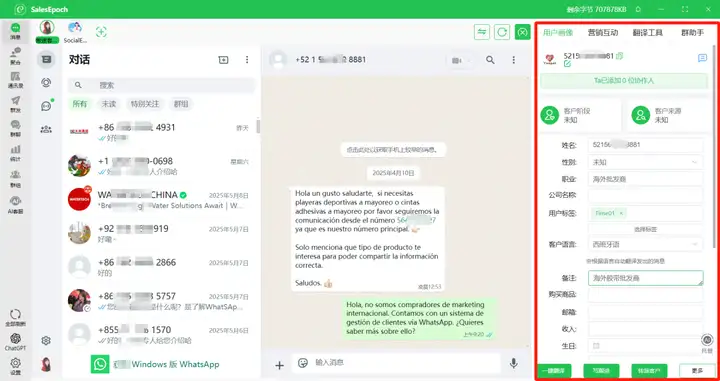
With the customer tag function, customer preferences and purchase records can be automatically recorded, making hierarchical operations more accurate. In addition, exclusive community activities are regularly held, such as "group discounts", "order lottery", "inviting friends to join the group to get coupons", which can not only activate old customers to repurchase, but also achieve fission and customer expansion, making the community a stable source of orders.
5. Compliance and risk control: protect customer assets and ensure long-term operations
WhatsApp community operations need to focus on compliance and security to avoid account risk control leading to customer loss. When establishing a group, avoid adding a large number of friends in a short period of time and import in batches; in daily operations, do not send illegal content, do not frequently refresh the screen, and respect the religious customs, laws and regulations of the target market.
At the same time, customer data is regularly backed up and the multi-account collaborative management function is used to avoid the risk of a single account affecting the overall operation. Once you encounter advertising harassment or malicious screen spam in the group, you can quickly handle it through the automatic kicking function to maintain the community environment and ensure long-term stable operations.
In fact, the core logic of WhatsApp community operations is very simple: use precise screening to gather high-intention customers, use efficient management to save operating costs, use value output to increase customer stickiness, and use layered operations to amplify conversion value. With the appropriate use of practical tools and handing over repetitive tasks such as batch import, automatic management, and precise reach to tools, operators can focus on core customer communication and value output, making the community truly a "conversion tool" for cross-border e-commerce and achieving long-term stable profitability.