DTC (Direct to Consumer) is the abbreviation of a brand business model that directly reaches consumers. HaveReduce channel circulation costs, improve customer experience through direct contact, and build brand power with personalized products and servicesand other differentiated advantages. In recent years, more and more companies have begun to embrace the DTC model, more and more new consumer brands are using the DTC model, and more and more brands are called DTC brands.

So, what exactly is DTC? From DNVB to DTC, what kind of development process has it experienced? This article will answer the past and present of the DTC model from four aspects: basic concepts, differential value, development history, and brand global expansion.
#01Basic concepts of DTC
DTC (Direct to Consumer in English) refers to a brand business model that directly reaches consumers. Its core concept is "consumer-centered" business thinking. The marketing method that uses the DTC model is called DTC marketing, and the brands that use the DTC model are called DTC brands, also known as digital native vertical brands.
DTC is a business model.
DTC faces consumers directly. As the name suggests, it has more direct interactive dialogue opportunities with users than other previous models. It can obtain more user data and user profile preferences based on a deeper understanding of users, and provide more feedback guidance for products and marketing. Because it faces consumers directly, companies need to focus on product service quality and customer experience from design, production, marketing, sales and other aspects. It also provides many opportunities for companies to innovate marketing and brand building.
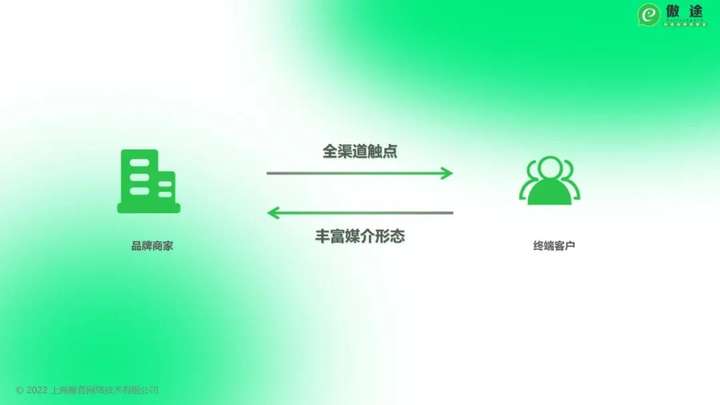
Under this definition, we find that the relationship between DTC brand merchants and users is a form of connection and interaction with omni-channel touch points and rich media forms. DTC brand merchants will reach customers through various touch points across all channels, including directly-operated stores, independent websites, social platforms, mini programs and other online and offline forms; conversely, customers can also get to know the brand through different media forms, such as advertising, products, transportation, after-sales, etc., forming an in-depth interactive connection between the two.
From the level of information access, companies can bypass other dealers and interact deeply with customers through social media and other methods; from the level of offline physical access, brands can almost sell directly to consumers through design, production, marketing, and sales. This dual direct contact online and offline will have a profound and obvious impression on customers. In this process, the brand power of DTC model enterprises will also be gradually established.
Because it is direct, it is profound.
When mentioning the concept of DTC, the two concepts are often compared together. Here is a brief comparison and explanation:
DTC vs B2C
DTC is a business model, which refers to a business model that bypasses all intermediate links and directly reaches users. It emphasizes thatReach customers directly. B2C is a consumer-oriented business form relative to B2B.The emphasis is on targeting C-end consumersRather than B-end enterprise merchants. The two are not products under the same classification standard, but DTC is more like a sublimation of B2C, placing more emphasis on user feedback and experience, and direct contact with consumers.
DTC vs F2C
F2C refers to Factory to Customer. The F2C model is to sell products through e-commerce platforms or Internet platforms after production by manufacturers to ensure that products are reasonable and quality services are guaranteed. The emphasis is on direct sales from manufacturers. DTC emphasizes reaching customers through the company's own mall, social platform, owned channel community, etc. It is the brand's direct contact with customers, not a third-party platform. The emphasis is not just on direct sales from factories to customers, but on the brand’s direct access to customers. DTC is also a sublimated F2C, achieving decentralization of e-commerce, emphasizing the company's own website/mall, etc., and emphasizing the company's own brand value.
The DTC model sublimates the business management ideas.
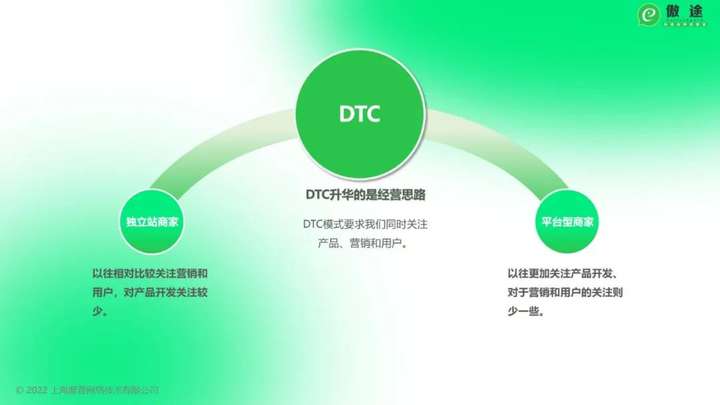
Platform merchants are equivalent to shopping mall counters. Because they have settled on the platform, they pay less attention to operational processes and customer acquisition and more to product research and development. Independent merchants, on the other hand, are equivalent to street shops. Since they need to fully explore their own traffic and operation models, they will pay more attention to marketing and users than platform merchants.
In the DTC era, companies need to pay attention to products, marketing and users. Because product is king, if you don’t pay attention to product, you will lose the foundation of this business; if you don’t pay attention to marketing, you won’t know when and where to acquire your users; if you don’t pay attention to users, you will be at a loss and don’t know what to sell, who to sell to, and how to sell?
Paying attention to products, marketing and users is not only a focus on corporate brands, but also a long-term vision for the future. This is also the subversion of the future by DTC.
#02 DTC differential value
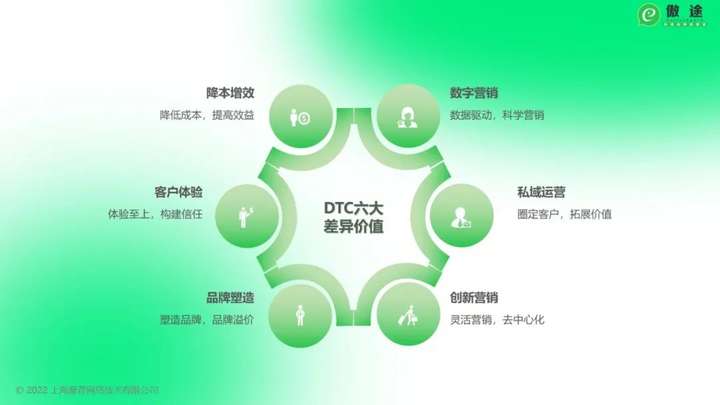
DTC is the abbreviation of brand business model that directly reaches consumers. Now, whether it is an old brand or a new brand, whether it is domestic, foreign or cross-border export, more and more brands are beginning to invest in DTC. Behind the embrace of DTC, it is natural to value its unique value compared with other business models. The following is a summary analysis of the differentiated value of DTC.
Difference value one: cost reduction and efficiency increase
Because they cannot stand the monopoly of platforms and the monopoly of giants on the entire industry, many DTC brands initially developed to face consumers directly and reduce various distribution costs. Warby Parker, the leader of DTC, discovered a bug in the supply chain and discovered a huge business opportunity, which led to its development and growth. To reduce costs and increase efficiency, we need to explore it from two perspectives: cost reduction and efficiency improvement:
How to reduce costs: Because DTC faces consumers directly, it avoids the circulation and communication of various channel merchants. Simply put, there are no middlemen to make profit differences, which naturally reduces the various circulation costs and customer acquisition costs of the company; How to increase efficiency: Because the brand reaches customers directly, it can establish in-depth interactions and emotional connections with customers, which can naturally expand customers’ lifetime value LTV and social circle value, and achieve more repurchases, higher conversions and customer reputation marketing.
Differentiation value two: digital marketing
Onlineization has been the keynote of DTC since its birth. From the very beginning,Digital NativeDigital NativeThis is the gene of the DTC model. Development started online, and a lot of communication costs were saved through direct online contact. Many DTC brands only began to move from online to offline as their business scale expanded in the later period, gradually breaking away from the digital native environment.
Because they are digitally native, they can obtain massive first-hand customer data, understand user portraits and consumer psychology, thereby collecting data, providing timely feedback, conducting scientific marketing, and unleashing the value of digital marketing in the information age.
Difference value three: owned-channel operations
The DTC mode has the same roots as owned-channel operations. The essence of owned channel is low-cost N-time direct access, and the same is true for DTC marketing.
Owned channel emphasizes direct contact, DTC emphasizes direct contact with consumers; owned channel emphasizes low-cost customer acquisition, DTC realizes direct communication with users and shortens circulation costs;
Owned channel emphasizes unlimited reach. DTC customers communicate with customers through the company's own carrier. DTC brand customers are the owned audience and can be reached unlimited times.
The core of DTC is direct interactive communication with customers, and social media is the carrier of instant communication. Many DTC brands have almost established good interactive communication with users on social media, so social owned channels are also a must-have for DTC brands.
Differential value four: innovative marketing
The value of this innovative marketing is reflected in three aspects:
- From the perspective of previous platforms, DTC brands do not rely on platforms, and their marketing methods also say goodbye to the rules and constraints of previous platforms.
- From a client perspective, DTC brand customers are the co-creators of marketing, and their feedback and portraits determine the company's marketing methods. On social media, users can co-create marketing and form massive UGC (User Generated Content), making the content decentralized and more colorful.
- From the perspective of the DTC brand itself, each DTC merchant can flexibly customize its own marketing methods and rules to produce rich and diverse PGC (Professional Generated Content).
Differentiation value five: brand building
This is also a big difference between the DTC and F2C models mentioned above. The operation process of the DTC model and brand building almost go hand in hand: customer experience builds brand impression, direct contact deepens brand recognition, owned-channel operations enhance brand stickiness, and innovative content shapes brand personality. Every step of DTC marketing is a process of brand building, from brand awareness to brand recognition, constantly shaping brand power, capturing the hearts of users, until they become loyal fans of the brand.
Differentiating value six: customer experience
The same customer experience runs through the entire DTC model operation process. As mentioned above, DTC requires companies to pay attention to products, marketing and customers at the same time. From the initial customer contact, striving to push information to thousands of people, to the product services throughout the transaction process, to the after-sales follow-up after the transaction, the customer experience progresses with the advancement of services.
Of course, mentioning the DTC model is always inseparable from several keywords, such as refined operations, consumer-oriented, membership-based marketing, timely feedback, consumer listening, personalized products and services, etc. Each of them is a vane of consumer experience first.
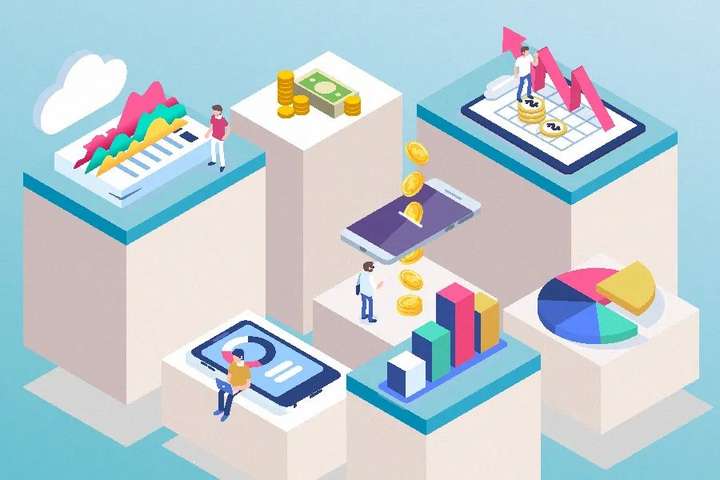
To summarize, this section explains the differentiated value of the DTC model, namelyCost reduction and efficiency improvement, digital marketing, owned-channel operations, innovative marketing, branding and customer experience. The rise of every emerging model definitely does not come out of nowhere. Many times what everyone sees is just a small concept, but behind it are subversions and opportunities one after another. The same is true for the DTC business model.
#03 DTC development history
Finally, we have entered the topic part. Speaking of the past and present of the DTC model, we can divide it into three key stages:
enlightenment stage: In 2007, the fashionable men's clothing e-commerce brand Bonobos was established. Founder Andy Dunn proposed a concept called DNVB (Digital Native Vertical Brand), announcing the awakening of the first-generation DTC model.
outbreak stage: In 2010, unicorns such as Warby Parker and Harry’s were mostly established during this period. They seized the opportunity of the explosion of social media, broke the monopoly of many platforms and giants, and rushed forward with the dividends of the times;
Standard configuration stage:
At present, the DTC model has almost become the standard configuration of new and old brands. Through the membership subscription system, DTC brands can deeply interact with users and provide users with scene experiences through new retail offline stores. The DTC model is promising in the future. Now that personalized experience and timely interactive feedback have become consumer habits, I believe that the DTC model will surely surprise us again and again.
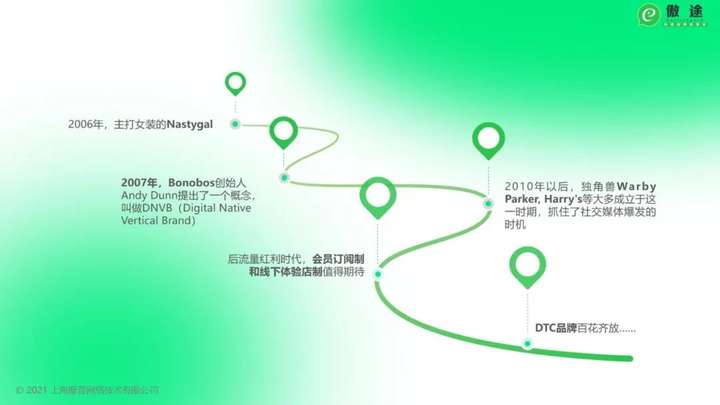
Here, let’s introduce it based on three more representative brands:
Case 1: Bonobos, the originator of the DTC model
Bonobos is the originator of the DTC model. It was established in 2007 and acquired by Walmart in 2017. It is an iconic brand in the enlightenment stage of DTC. Founder Andy Dunn innovatively proposed a concept called DNVB (Digital Native Vertical Brand), a vertical e-commerce brand native to the digital information era, which is also the prototype of today's DTC.
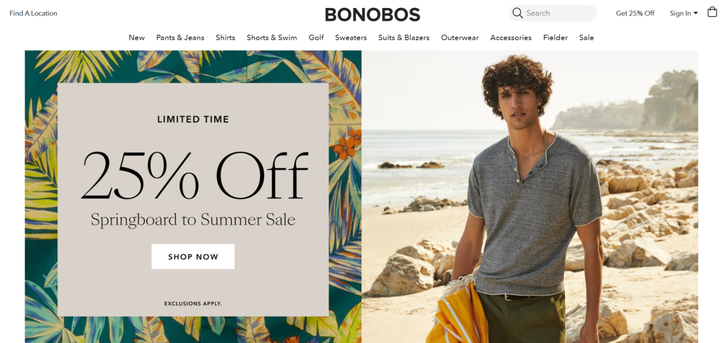
This is a brand that was born on the Internet and was initially sold only on the Internet. DNVB is a business model with a vertically integrated supply chain. Production, manufacturing, sales operations, and logistics are all completed directly and seamlessly by the brand itself. Bonobos also became popular with its iconic line of men's pants.
DNVB can be understood in two parts:
- Digital Native: In terms of origin, it originated entirely online and was initially sold only on the Internet. This also sets the tone for the DTC brand’s Digital Native data. Offline is the result of later expansion or brand strategy adjustment;
- Vertical Brand: A vertical brand integrates the entire process from the supply chain to sales to consumers, without the need for other channel providers and dealers to intervene, and directly runs through the entire sales process. Bonobos has developed into a leader in the segmented industry, and it also follows the strategy of breaking through at a single point.
By providing consumers with affordable and practical products through direct online contact, coupled with its grasp of the dividends of the first-generation social traffic, Bonobos developed rapidly and was acquired by Walmart in 2017, becoming a legend of the DNVB model.
Case 2: The Master - Warby Parker
Warby Parker is characterized by high quality and low price. It sends 5 pairs of glasses to customers for trial use for US$95, which completely reduces the high price. The background of its establishment is that the glasses manufacturing giant Luxottica monopolizes more than 60% of the U.S. market: Ray-ban/Oakley is owned by Luxottica; Prada/D&G/Chanel is owned by Luxottica; offline optometry stores Lenscraft/Sunglass Hut are owned by Luxottica; and the largest eye insurance company in the United States, EyeMed, is also owned by Luxottica.
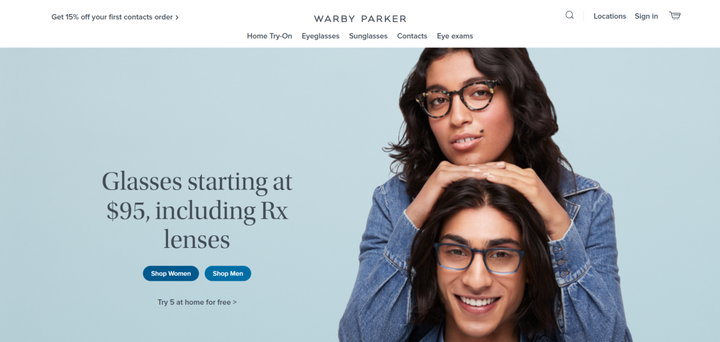
Behind the monopoly, the founder of Warby Parker also discovered bugs in the supply chain. He outsourced manufacturing to offshore factories in China to provide users with high-quality and low-cost products and maintain a good customer experience.
Case 3: DTC brand global expansion giant—SHEIN
SHEIN is China's cross-border e-commerce giant and a representative company of DTC brand global expansion. In May 2021, SHEIN replaced Amazon (AMAZON) to become the most downloaded shopping app on iOS and Android platforms in the United States.
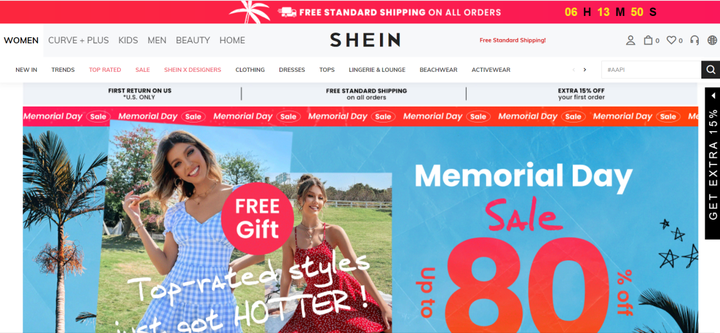
In the development process of DTC brand global expansion, SHEIN has epoch-making significance. Before SHEIN, many merchants were thinking about the traffic of website groups/store groups. However, SHEIN seized the opportunity of the development of social media, directly contacted customers through social media, established a boutique independent website, bid farewell to the past traffic thinking and invested in brand thinking, and achieved success.
Of course, the development of giant SHEIN is not just as simple as establishing a high-quality independent website. Many institutions and experts on the market have studied SHEIN and found that its successful development is due to the company's three major moats, which are:
- Ultimate social media marketing, such as KOL marketing, community marketing and saturated advertising, etc.;
- The ultimate flexible supply chain system, creating the ability to quickly return small orders;
- With ultimate digital capabilities, SHEIN has created various digital systems, such as designer empowerment systems, design assistance systems, user portrait systems, production control systems, etc., to maximize data use.
Therefore, many outsiders call it a technology company rather than a cross-border e-commerce company.
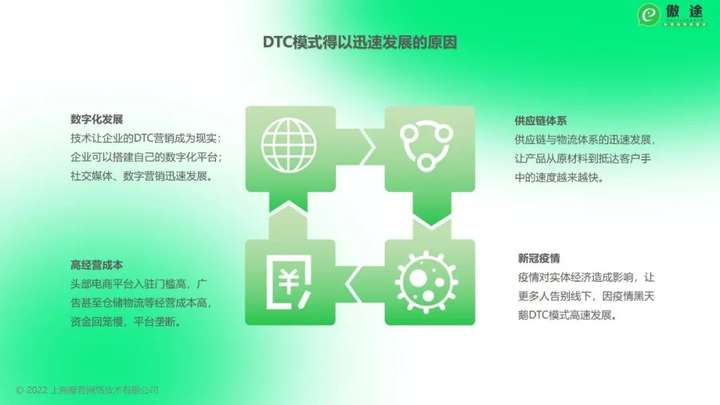
During this development process, it is not difficult for us to see the reasons for the rapid development of the DTC model. If the second part of differentiated value is the consequence, then the following are the antecedents, and they are:
- Digital development: The development of digital information technology makes the DTC model of enterprises a reality. Taking advantage of such a once-in-a-lifetime opportunity, companies can build their own digital platforms, use the value of social media, and embrace digital marketing to achieve scientific marketing.
- Supply chain system: The rapid development of supply chain and logistics systems has made products more efficient and better in quality from raw materials to reaching customers.
- High operating costs: The monopoly of e-commerce platforms or giants has caused consumers to complain, and it has also allowed many DTC brands to strive for development opportunities.
- COVID-19: The epidemic has had an impact on the real economy, causing more people to bid farewell to offline and shift to online. The black swan of the epidemic has led to the rapid development of the DTC model.
Times make heroes. Without the support of these background technologies, the DTC model will probably only be a castle in the air. So many times what makes people sigh is not only the success, but also the wise decision in that moment. Of course, the more information you have, the easier it is to do the right thing at the right time.
#04 DTC brand global expansion
China's supply chain advantages (to put it bluntly, the advantages of manufacturing) have strongly empowered DTC brand global expansion. With the rapid development of the global logistics system, the exhaustion of dividends in the domestic traffic market, and the global vision of domestic merchants, many merchants have begun to turn to DTC brand global expansion.
Under this opportunity, there are two types of DTC brand global expansion:DTC global expansion strategy for domestic brands and DTC strategy for cross-border e-commerce brands. Whether the former is superior or the latter is slightly better is still unknown. Let us look forward to the future of DTC brand global expansion. SocialEpoch will also pay attention to you and share more excitement.
In addition, whether building an independent website is equivalent to global expansion of the DTC brand, the answer is of course no. It is true that DTC was first developed overseas, and self-built independent stations are also standard in the DTC model. However, the core of DTC is direct interactive communication with customers. Real-time interactive communication tools such as social media/social platforms will be more conducive to brands and customers reaching out in real time. The owned audience pool and social e-commerce using social media as a carrier are also gold mines worth exploring for the global expansion of DTC brands. Whether it is a powerful giant like SHEIN or an emerging brand, social interaction can provide brands with opportunities to establish fair interactions and communication with customers.
Of course, the marketing strategy of DTC brand global expansion is definitely a huge topic that deserves further study. SocialEpoch will explore this with you in a subsequent special series.
Finally, as the first article in the DTC topic series, this article briefly introduces the basic concepts, differentiated value, and development history of the DTC model, and also briefly mentions the global expansion of DTC brands. I would like to write this article to help you establish a basic understanding of the DTC model, and know yourself and the enemy so that you can fight without danger.