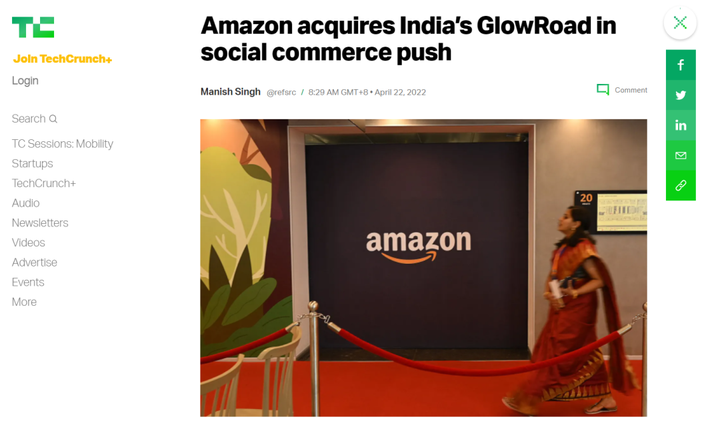
Recently, the e-commerce giant Amazon has another new news: it has acquired the Indian social e-commerce company GlowRoad, further launching an attack on social e-commerce.
The entry of giants into social e-commerce is nothing new: since 2016, Twitter has launched the “buy now” function, which is considered the earliest prototype of social e-commerce. Since then, people have opened up a new world: they can complete consumption through social platforms without re-entering the e-commerce platform, and they can see and buy immediately. And this seems to reveal that the future of retail is already here.
- In June 2019, Facebook invested in Meesho, an Indian social e-commerce unicorn;
- In July of the same year, Youtube invested in Simsim, another social e-commerce company;
- Recently, foreign media reported that Flipkart’s social e-commerce brand Shopsy is expected to have more than 100 million users this year...
- This time, the entry of Amazon, the leader of the e-commerce platform, has made the already popular overseas social e-commerce even more lively, and also made this new fertile ground for e-commerce even more attractive.
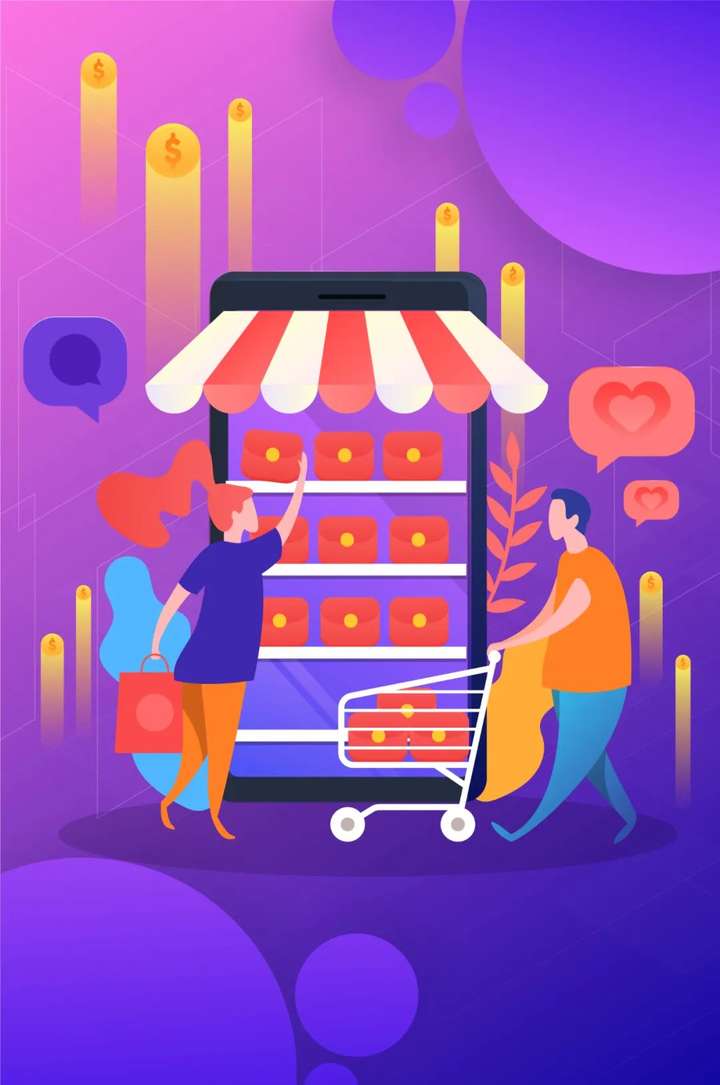
▼ What is the magic of social e-commerce, which even the giant Amazon cannot escape?
We have mentioned many times in previous tweets that with the continuous development of Internet information technology, the traffic dividend of public domain platforms has disappeared, and customer acquisition has become increasingly difficult and expensive. Social links realize one-on-one communication with each customer in the form of unlimited direct contact, avoiding the cost of secondary traffic. Coupled with the penetration of social e-commerce into users’ social circles,Save on your own purchases, earn by sharing, and earn commissions from referralsThe social fission not only took root, but also thrived, creating an ant-like communication matrix for enterprises, and the circulation efficiency of goods was naturally higher.
From the perspective of consumers, this change in consumption position naturally makes it more convenient, more affordable and more reliable to buy what they want. Watch now, buy now, and go without having to jump or re-enter a new platform.
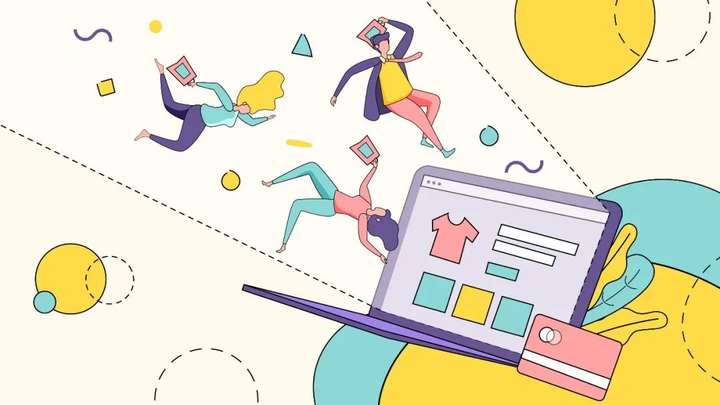
This change also caters to the needs of thousands of new entrepreneurs. Distribution based on social applications has greatly lowered the threshold for entrepreneurship. This new type of entrepreneurs also has a common name - Little B (Business).
▼ The end of social media/social is social e-commerce, and the end of social e-commerce is S2B2C.
Yes, any similarity is purely intentional. Whether it is the most popular Meesho, or GlowRoad, Simsim, Shopsy, etc., they are all a proper S2B2C model that achieves profitable development by empowering small businesses to distribute and sell goods on social platforms.
If you need to understand the S2B2C model, you can read this article:One article explains the cross-border S2B2C model and practical strategies for online brands/new retail brands
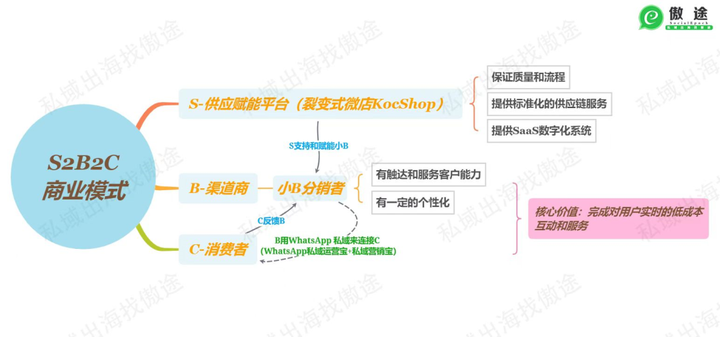
This decentralized sales form is another embrace of traffic by giants in the era of fragmentation after the public domain era in which they controlled traffic. What is different from the past is that this transformation is not only an opportunity for the Amazon giants, but also a common opportunity for all enterprises and small distribution companies.
The same is true for cross-border enterprises. There are three key factors for cross-border e-commerce from 0 to 1:Product selection, website building and traffic marketing. The social e-commerce S2B2C model solves the problems of difficult, expensive and high traffic concentration risks for cross-border enterprises. Traffic is concentrated on one platform, resulting in high risks; there is no direct social communication with customers, resulting in no guarantee for sellers. I believe that companies that have experienced platform account suspension will have a greater say in this.
Overseas distribution companies are also in dire need of support and are in urgent need of digital system support. For overseas KOLs, many used to realize their income through creator funds, but now combined with social distribution, it can bring them significant income growth. Compared with domestic mothers, it is normal for overseas mothers to have multiple children. Distributing as a little B has lowered the threshold for them to start a business, gained profits, and demonstrated their personal value.

In addition to them, there are also community group owners and small shop owners. They are all small B groups with a wide social circle. These are all opportunities for cross-border enterprises.
To summarize: Amazon’s acquisition of GlowRoad and the influx of giants into social e-commerce further illustrate the value and future of social e-commerce. In the era of fragmentation, traffic is fragmented, and public domain platforms will not be the only source of traffic. The S2B2C model of social e-commerce creates an Ant-like army-like publicity and distribution effect for enterprises.