Membership marketing is a topic that countless companies cannot escape.“Build customers when you are free, get orders when you are busy, get members for new stores, and rely on members for new products.”This is the core idea behind membership. In other words, it is to improve business efficiency.
For cross-border enterprises, the long-term value of membership cannot be avoided. In this article, SocialEpoch will explain in detail the significance of membership marketing for cross-border enterprises and four methods to improve membership stickiness. Below, Enjoy:
1.The commercial value of membership marketing for cross-border enterprises
First, save costs
From the perspective of customer acquisition, membership is equivalent to attracting traffic once and reusing it N times. The cost of customer maintenance is also much lower than the cost of attracting new customers. Therefore, for enterprises, the important value of membership operations is cost savings.
Second, increase single customer value
From a conversion perspective, membership means increasing customer unit prices and repeat purchases, establishing good interactive relationships with customers, enhancing customer loyalty, and maximizing the customer's lifetime value (LTV).

Third, retain member data
Members are the precise customer base of every enterprise. Based on member groups, companies can build powerful customer databases. Combining these databases, they can analyze customers' consumption preferences, behavior patterns, etc., to provide basis for marketing.
Fourth, brand promotion
Gold cups and silver cups are not as good as customers' good reputation. Membership-based marketing allows companies to establish a deeper emotional connection with users, which is helpful for customers to establish deep brand awareness. At the same time, members' word-of-mouth publicity can also be used to enhance brand awareness.
All in all, the significance of cross-border enterprise membership marketing is to retain customers, establish long-term, good and stable relationships with customers, enhance loyalty and thereby improve operating efficiency. In the cross-border market where traffic costs are high, it occupies an increasingly important position.
2. Four tips to improve the stickiness of cross-border corporate members
First, create user tags and establish user portraits
The reason why members are called members is that they have different rights and services from ordinary users. If you want to provide better membership services, it depends on the company's in-depth understanding of users. Just imagine, it is definitely inappropriate to talk about football news with a baby's mother or milk powder and diapers with teenagers. Therefore, the establishment of a user portrait system is a must.
User portraits are basically reflected by the label system. Whether it is CRM or the now popular Social CRM, a large number of labels can be created. From basic information such as gender and age of customers to personalized tags reflecting preferences, cross-border companies can establish a tag system.
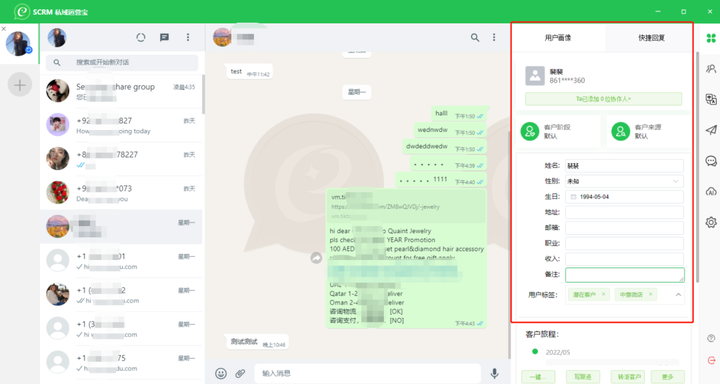
With portraits based on such a tag system, cross-border enterprises can target member portrait groups and deliver more content that members need to reduce unnecessary interruptions; communicate in the language that customers are accustomed to, and shorten the distance between each other; they can also differentiate based on tags and push appropriate content to customers at the right time. Let your members feel like they are being served, not being marketed.
For more information on cross-border corporate user portraits, you can click here:Let’s talk about why cross-border enterprises need SCRM (Social-CRM) from the perspective of user portraits.
Second, record the customer journey and provide personalized services
Customers will produce a large number of verbal behaviors at every step of their contact with the enterprise. Especially for member users, the journey is longer and there will be more interactions than other users.
Then, introducing customer journeys can help companies solve this problem. After customers express important information and perform key actions, companies can record this in a timely manner.
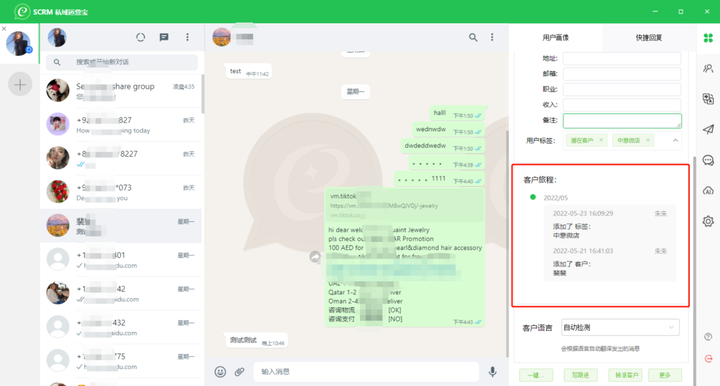
Such a casual note will help the company understand the other party's behavior and habits more clearly in the follow-up follow-up of member services, and provide personalized services based on customer characteristics.
Third, internal collaboration to improve member experience
For member users or big B customers, they are often not served by a single person. In such cases, internal collaboration and joint services are very important.
Internal collaborative empowerment includes two points.First, the enterprise empowers frontline personnel, such as unified and standard reply techniques and introductions, to improve the professionalism and efficiency of frontline personnel's services; secondly, there is also collaboration between personnel, such as information synchronization when multiple people follow up, succession when personnel are replaced, etc.
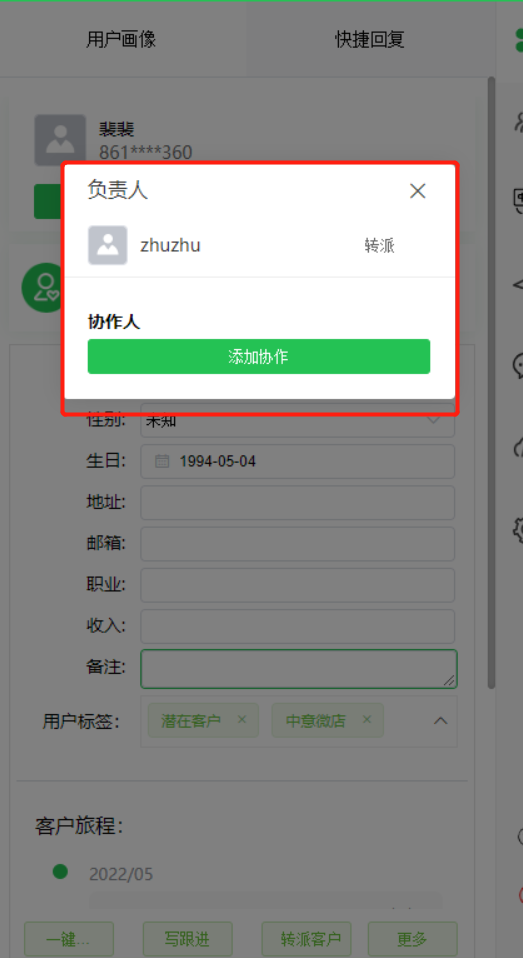
With the seamless cooperation of the backend, front-end member users will have a good experience and generate more value.
Fourth, relaxed and interesting interactions promote member activity
For member user marketing, every company will have thousands of ways to play: tiers, points, gift certificates, gifts, draws, etc. in various forms. What we want to emphasize here is the interactive form when delivering these activities.
Isn’t dry text no more element-rich than pictures or H5 pages? Isn’t a simple greeting more exciting than a red envelope? Yes, overseas users can also send red envelopes through social interaction. Please consult the customer service at the bottom for specific methods.
Member marketing is different from the past. It pays more attention to the personalized experience of each independent member and also focuses on the digital transformation of corporate operations. Tags, portraits, collaboration, and interaction are all empowering to improve member services and provide a good experience. The significance of these empowerments is to capture the hearts of member users.Establish a good emotional connection with members, use information technology to help companies and members establish long-term trust, and realize the extension of member value.
3. Cross-border membership operations help discover super users
The so-called super members/users naturally refer to member users who can generate a lot of value for the enterprise. They either have extremely strong spending power or have extremely strong recommendation ability.Whether it is the vertical LTV lifetime value of users or the horizontal social circle value, they are basically inseparable from the refinement of corporate membership marketing methods.
It is as detailed as the personalized experience of each customer, the content of each push, and the service quality of each person. In the current era of emphasis on experience, content, service and marketing, we should discover and tap the greater value of member users.
Among the three major categories of SocialEpoch cross-border owned-channel marketing, social retail B2C/B2B companies need to interact and communicate with a large number of super users/VIP customers to discover the full life cycle value of customers. For such enterprises, membership operations are basically equivalent to owned-channel operations. The social owned channel membership system built on this basis realizes in-depth and effective interaction between enterprises and super users, and is also in line with the current habits of users' online social life.
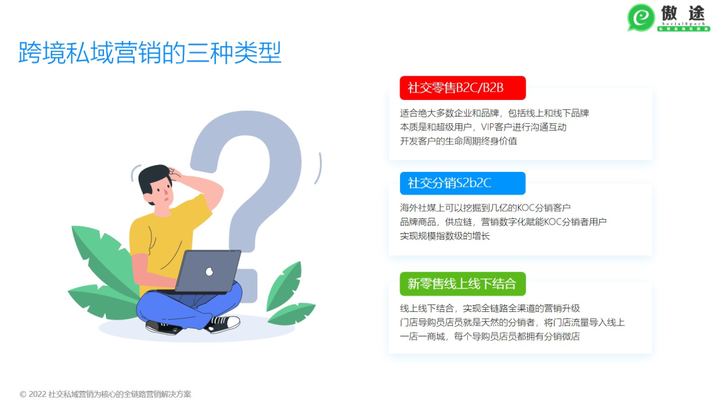
The membership user service model embedded in social platforms also enables frontline staff to provide timely and rapid feedback on user information, real-time communication and interaction with customers, and one-to-one contact. In the era of consumer-centered interactive marketing, the effectiveness of membership-based marketing for cross-border enterprises has been significantly improved.