Entering the social era, customer management communication has also begun to shift towards a social form. From the original CRM to the current Social CRM, wonderful changes have also taken place between customers, sales and enterprises.
1. Customer interaction: from offline recording to instant display
Traditional CRM: Customer data is mainly recorded offline, and follow-up records need to be updated manually. It is difficult to obtain a complete portrait in real time during communication, and information synchronization lags behind, which can easily lead to a disconnect between marketing actions and customer dynamics.
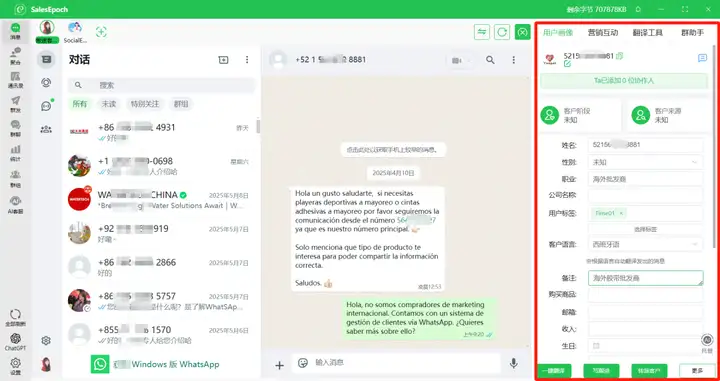
Social CRM: Real-time display of sources, tags, portraits, follow-up records and other information in the customer portrait column, supporting viewing while communicating, and real-time synchronization of the latest customer developments (such as social interactions, behavioral trajectories). For example, when customer service communicates with customers, they can simultaneously see their historical follow-up records, quickly match communication strategies, and upgrade customer management from "static files" to "dynamic radar", greatly improving marketing efficiency.
2. Interaction logic: from “one-way management” to “two-way interaction”
Traditional CRM is enterprise-centered, focusing on customer data management and transaction process follow-up. Most interactions are passive responses (such as customer inquiries and complaints), lacking active contact and emotional connection. For example, when promotional information is sent via email, it is difficult to track real user feedback.
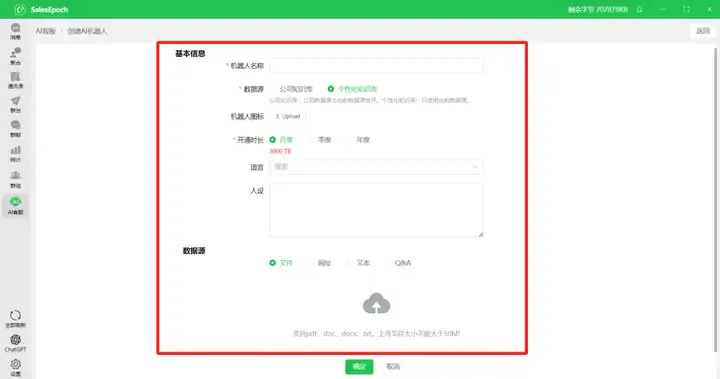
Social CRM is user-centered, emphasizes social interaction operations, and actively establishes dialogue through social platforms, such as community Q&A, content co-creation, KOL cooperation, etc., to transform customers from "buyers" into "brand participants". For example, DTC brands guide users to UGC content through TikTok challenges, and simultaneously deposit it into Social CRM to analyze user preferences and push product iterations.
3. User value: from “single transaction” to “lifetime value mining”
Traditional CRM focuses on transaction conversion and improves repurchase rates by analyzing historical orders, but it lacks assessment of users’ social influence. For example, push targeted coupons based on customer consumption amounts.
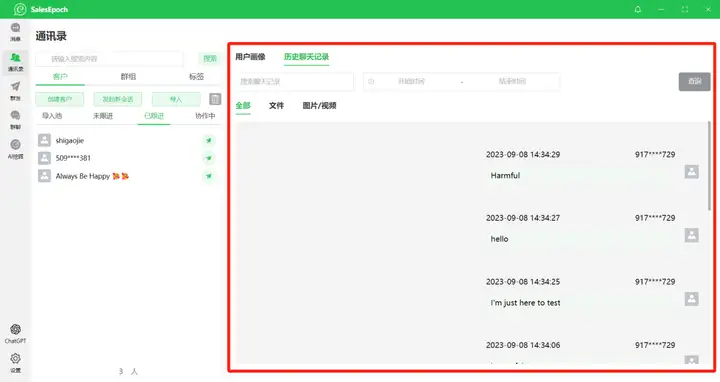
Social CRM expands social value, not only focusing on purchase behavior, but also paying more attention to users’ social communication capabilities (such as whether they are active users in the community and whether they have KOC potential), and amplify customer lifetime value (LTV) through “social fission + word-of-mouth communication”. For example, cross-border e-commerce companies use Social CRM to identify "opinion leaders" in the community and provide exclusive benefits to encourage them to share their shopping experiences and drive the growth of new customers.
4. Operation model: from “internal collaboration” to “global integration”
The functions of traditional CRM are concentrated within the enterprise, serving the process efficiency of sales, customer service and other departments. The data is limited to the enterprise's own system and is separated from the external ecosystem. For example, the sales team manages customer follow-up records through CRM, and the marketing department independently carries out advertising.
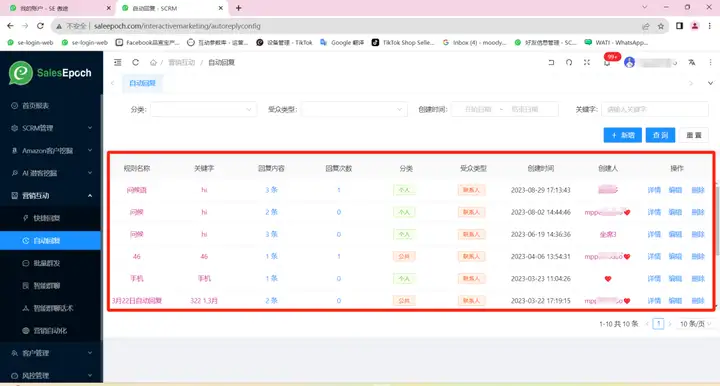
Social CRM opens up the "public domain traffic + owned channel precipitation" global marketing to achieve a marketing-sales-service closed loop. For example: the market directs users from stand-alone advertising to WhatsApp communities (social marketing); records user sources through Social CRM tags; customer service quickly responds to after-sales issues based on historical chat records (precision service), and sales and after-sales use a collaborative system to understand historical information, operate and manage customers.
Summary: Social CRM’s “Social Gene” Breakthrough
- Essential positioning: Traditional CRM is a “customer data management tool”, while Social CRM is a “social user operation platform”.
- Differential value: Social CRM focuses on the operational capabilities of social relationship chains.
- Applicable scenarios: Social CRM is more suitable for global expansion businesses that require in-depth user operations (such as DTC, brand global expansion, B2B customer management, etc.).
Traditional CRM is an "offline account book of customer data", while Social CRM is an "intelligent dashboard that connects users' real-time dynamics", which is especially suitable for global expansion companies to achieve precise interactions and build global dynamic customer assets in the era of social e-commerce.