01Review of store closing incident
On October 3, Indonesian TikTok sellers ushered in their darkest moment: the official email notification clearly informed everyone that TikTok Shop was officially closed at 17:00 Western Indonesian Time on October 4.
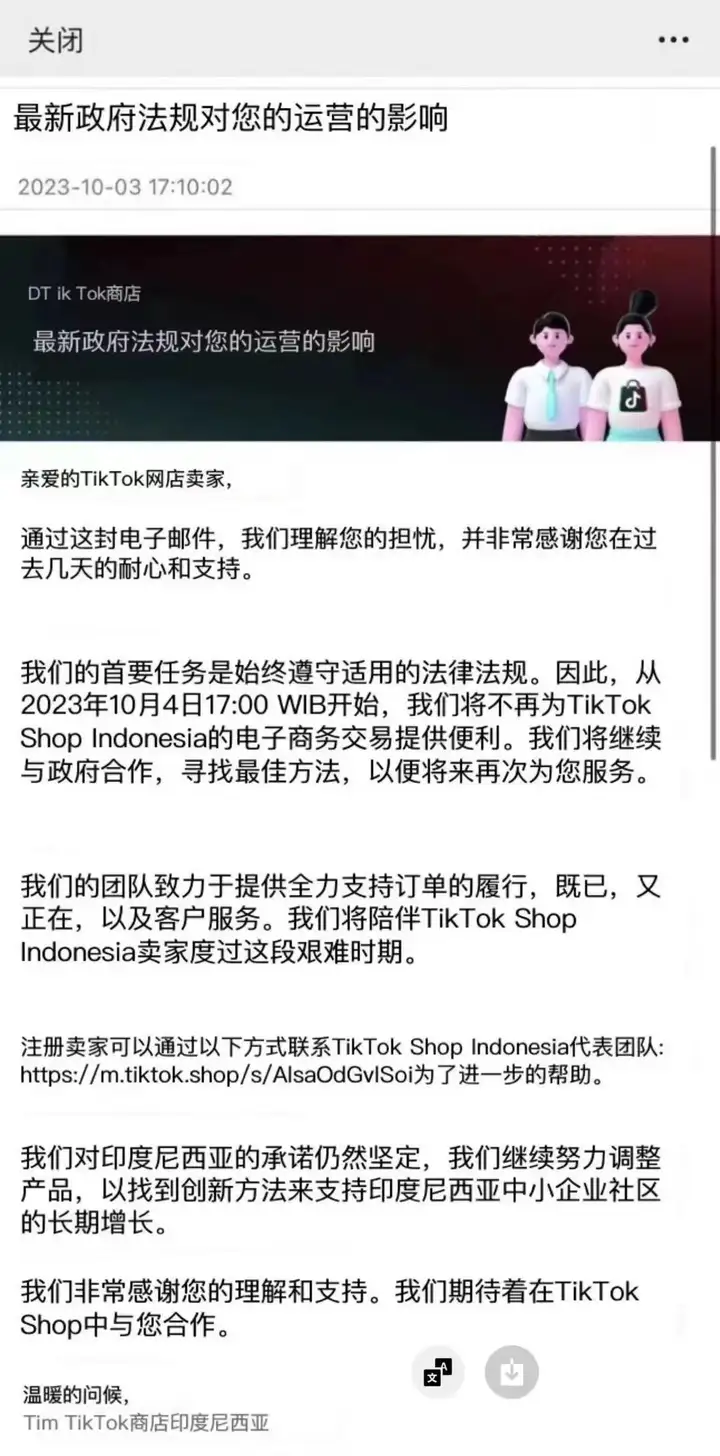
At this point, TikTok has become a short video content platform in Indonesia that no longer has "e-commerce functions". Everyone can continue to promote products based on TK, but they cannot sell on this platform.
This will undoubtedly have a fatal impact on the 6 million TK sellers and 7 million creators. Although there are other ways to accept and utilize this traffic, the effect will definitely be much lower than that of TK Shop, and it will be more cumbersome for buyers and sellers.
02A warning to all sellers
In recent years, global expansion cross-border groups have faced a variety of challenges and risks, whether it is the impact of the platform's own regulatory policies or the requirements of local policies and regulations. For example, the wave of Amazon store closures in 2021 and the current closure of TK Shop in Indonesia have given global expansion cross-border merchants a profound warning: to enhance risk awareness.
Cross-border global expansion companies face more uncertainties than domestic sales, so they must grasp the core elements of operations and avoid unexpected risks. For example, don’t put all your eggs in one basket, choose multiple platforms, multiple channels, and multiple forms of sales and business models.
Judging from the nature of retail transactions, it contains three important elements: people, goods, and places. When people buy goods in the market, a transaction is concluded. Among these three elements, the goods are generally in the hands of the merchants themselves, the people refer more to the customers, and the venue is the platform or scene where the transaction is concluded.
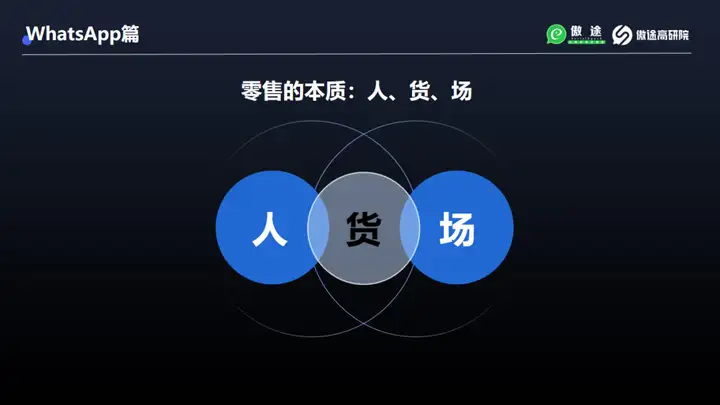
The risks of many merchants basically come from people (customer perspective) and markets (trading scenarios). This is true whether it is the Amazon account suspension incident or the current closure of TK Shop Indonesia: the wave of account suspension closures caused sellers to lose customers and transaction scenarios at the same time, while the closure of TK Shop affected transactions.
Therefore, for any seller, it is more necessary to improve risk awareness and reduce business risks from both the human (customer perspective) and market (trading scenario) perspectives.
03owned channel’s charm is unstoppable
In the interpretation of the owned channel system, we understand that the essence of owned channel isLow cost and unlimited direct access, based on this essence, enterprises can obtain three significant values, the third of whichPrecipitate enterprise digital assetsIt is the grasp of customer data, that is, the retail element of people.
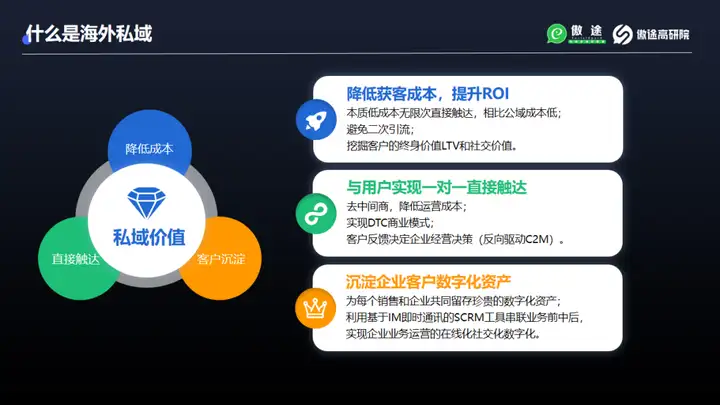
Compared to the public domain, owned channel is a group that is independently owned by the marketer and can be directly contacted N times at low cost. Its characteristic is that it is "private". Holding customers firmly in your hands, whether it is transformation or communication, you can flexibly schedule and use it to avoid being tied up by the platform or affected by regulatory policies, and greatly reduce business risks for sellers.
04How to minimize losses after closing the store
For many TK sellers in Indonesia, if they want to continue to complete the entire transaction and reduce operating losses, there are two common methods:
First, use TikTok as a social media platform for customer acquisition, return to the era of external link jumps, and guide customers to Shopee/Lazada/independent stores and other stores to make direct transactions through TK content or advertising;
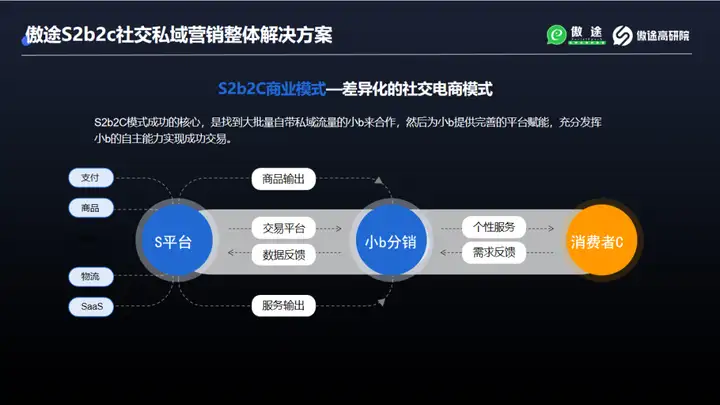
Second, TK is still used as a traffic diversion platform, importing all customers into WhatsApp for owned-channel operations, and then conducting owned-channel marketing to promote customers to make transactions in stores such as Shopee/Lazada/independent stores, or directly create a distribution micro-store system to carry out S2b2C model distribution fission, fully explore the lifetime value and social value of each customer, and at the same time retain customer data for the enterprise.
The second point is also a very effective solution for Indonesian TK sellers:
First of all, the penetration rate of WhatsApp in Indonesia is as high as 89%. It is a commonly used IM and is similar to domestic WeChat. Therefore, it is reasonable and appropriate for merchants to use WhatsApp to add customers.
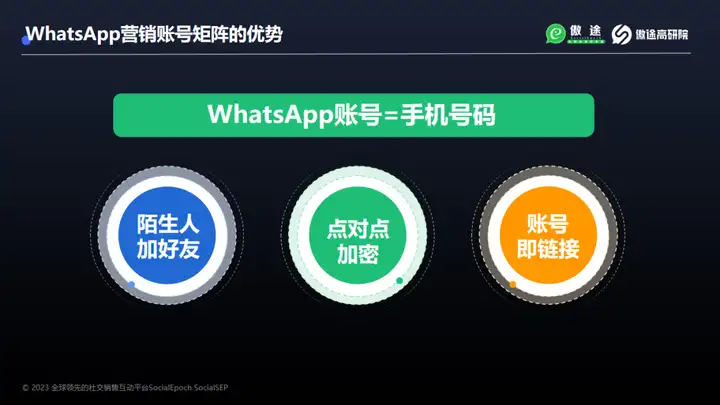
Secondly, WhatsApp has the characteristic that account number = mobile phone number, which can be said to be a great convenience for retaining customer data. Having one means having the second. In addition, when encountering account suspension and other situations, you can also use the inheritance function of the tool system to find customers to avoid the loss of customer data.
Finally, it’s about making full use of customer lifetime value and social value. The above method of directly guiding customers to the store to make transactions cannot achieve such an effect. In terms of calculating operating ROI, the two key issues are reducing costs and increasing customer conversion benefits. Driving traffic from TK social media to Shopee stores can only promote a single conversion of some customers, but the repurchase opportunities of these customers and the conversion opportunities of unsold customers are not seized, which invisibly reduces conversion benefits.
Combined with WhatsApp owned-channel operations, all customer data is retained, and combined with features such as real-time interaction, it can strive to promote more conversions from more customers and improve operating ROI.
On the basis of doing this well, another opportunity worthy of attention is the fission of S2b2C model distribution. No matter which region customers are in, circle gathering and social interaction are common characteristics. Using the WeChat store system with distribution fission function in the owned channel scenario can create a distribution growth system that can be sold by all employees. In this regard, we can get a lot of inspiration from domestic Yunji and overseas Meesho.
05 Resist risks, not just TK Indonesian sellers
An extended thought on why eggs cannot be put in one basket: Whether online or offline, every company must retain customer data, keep customers in its hands, and realize corporate digital marketing.
The same is true for new offline retail stores. Domestically, new retail owned-channel marketing based on WeChat and WeCom has improved customer conversion effects and efficiency for enterprises. Overseas, especially in countries like Indonesia where WhatsApp penetration is relatively high, WhatsApp can be combined with offline customer retention and online customer owned-channel operations to extend store service hours, expand store service scope, increase customer cycle value, and promote higher and faster conversions.
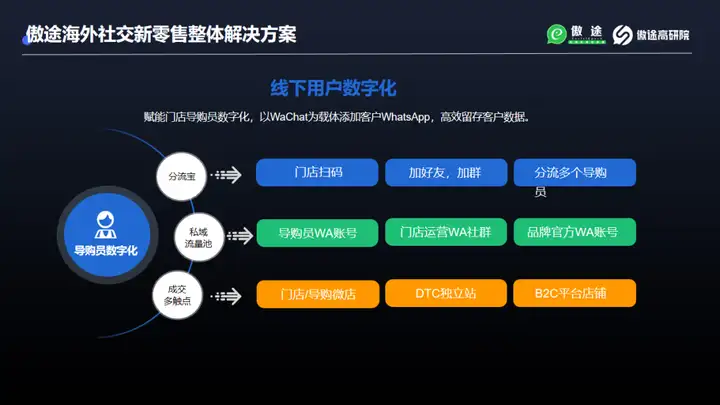
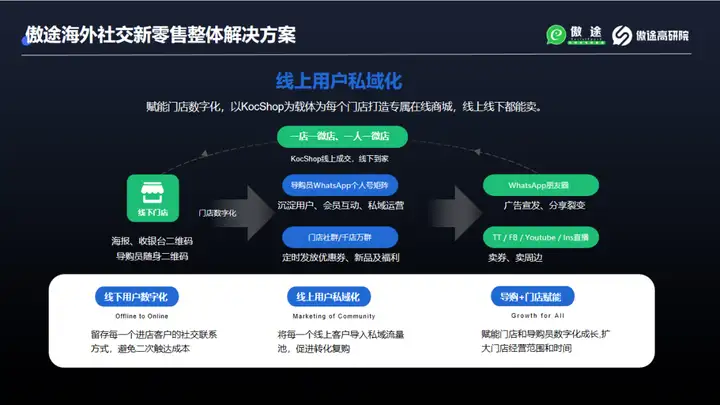
From a risk perspective, it also reduces operational risks for offline stores and saves customer data.