For a long time, many sellers have said that even products that are highly profitable in the eyes of others are not profitable. Investigating the root cause, it comes from the high intermediate costs of enterprises: for example, many B2C companies complain about the platform. The platform affects pricing and allows sellers to sell goods at low prices. Sellers report not only little profit but also massive fines.
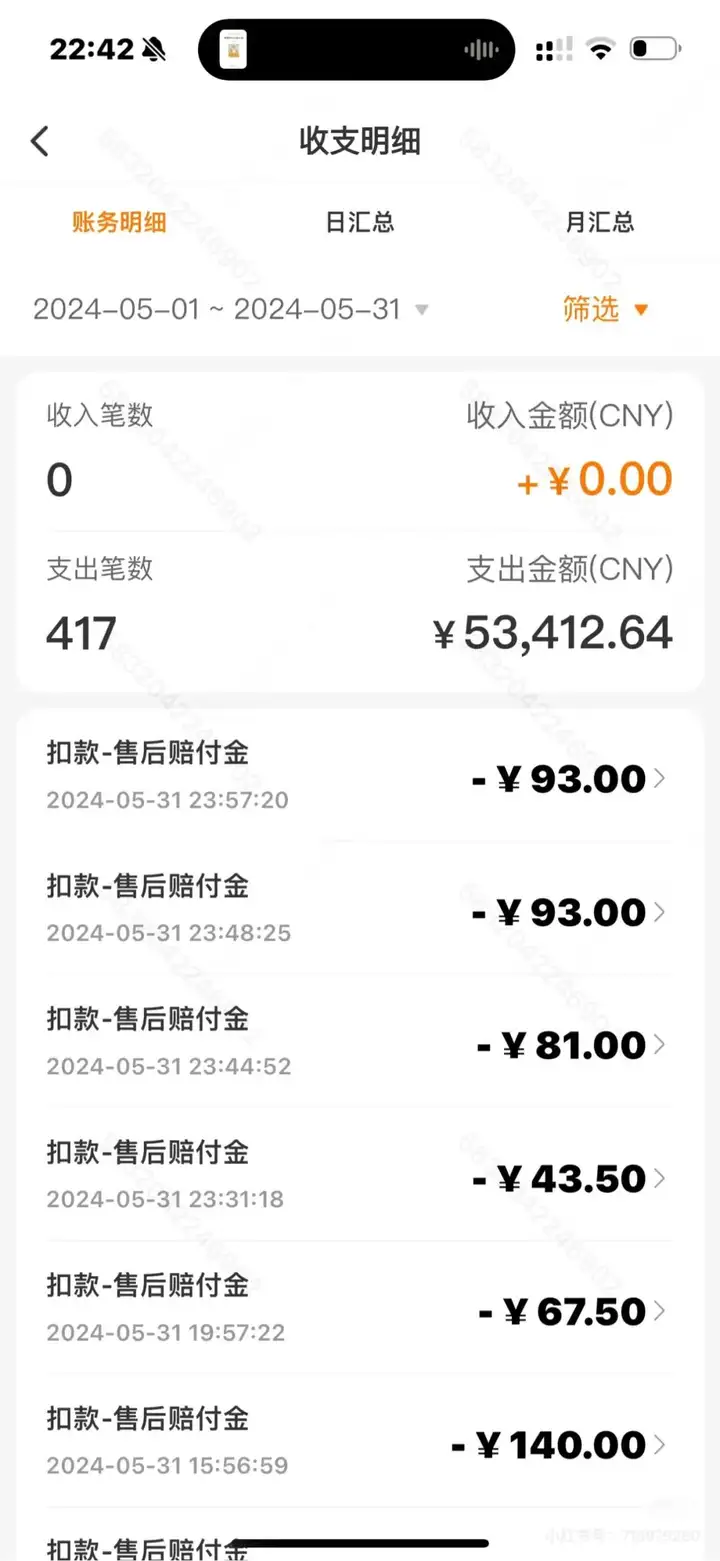
Screenshot of a platform seller being fined
For cross-border e-commerce merchants, the competition on Amazon is fierce, and new players are investing more and more to enter the market. It is common to lose tens or even millions. Only some old and compliant sellers can make money compared to other platforms. More than 90% of sellers on the TK platform say they do not make money, and very few make money.
This year's cross-border sales are also extremely difficult. The difficulty is that except for the Canton Fair, there are almost no overseas buyers at domestic exhibitions this year. Even at the Canton Fair, there are fewer and fewer big European and American customers. Purchasers from third world countries have been added. These areas are relatively underdeveloped, consumers have limited purchasing and payment capabilities, and global expansion companies also have difficulty making profits.
At present, Africa is no longer profitable due to too many Chinese people going there. As for Southeast Asia, due to its innate geographical advantages, it has already been fully covered by the hard-working Chinese global expansion people. Where else can we make money? South America is probably the place where Chinese people go least often. Otherwise, Antarctica is the only place left.
a set of data
The trade import and export volume between South America and China will be US$489 billion in 2023. China accounts for about 20% of the import volume of many South American countries and is the largest trading partner.
In most countries around the world, offline and B2B transactions are absolutely mainstream. In fact, except for China and the United States, the proportion of online B2C models is very low in other countries. South American e-commerce only accounts for about 10% of the retail industry. Most countries in South America do not have industrial manufacturing capabilities, so many products rely on imports. Chinese products are very popular there due to their high quality and low price.
Some people say that Africa does not have industrial manufacturing capabilities. Why not recommend Africa? Let’s take a look at the per capita GDP of several well-known countries in South America in 2023:
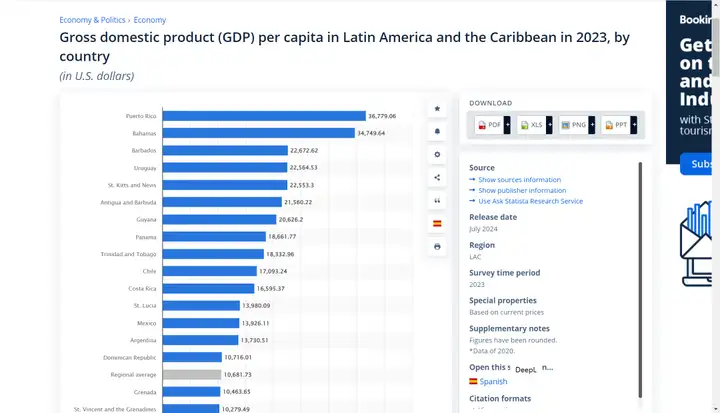
- Chile’s GDP per capita is US$17,093
- Argentina’s GDP per capita is US$13,730
- Mexico’s GDP per capita is US$13,926
- Brazil’s GDP per capita is US$10,043
- Peru’s GDP per capita is US$7,789
If any friends are not sure, let’s make a comparison, 2023 - Thailand’s GDP per capita is US$6,384
- Indonesia’s GDP per capita is US$4,919
- Malaysia USD 11,691
- The Philippines and Vietnam are US$3,726 and US$4,324 respectively.
Taking Southeast Asia, which is most familiar to Chinese people, as a reference, except for Malay (Singapore is too special to discuss), Peru can be said to be richer than other countries in Southeast Asia. Therefore, rather than going to Southeast Asia for global expansion, it is better to explore new markets and new opportunities in South America.
So, what products are most popular in South America? In addition to the daily necessities we often talk about, products with relatively high profits include China's new energy storage batteries, electric vehicles, solar fan lights, glasses, etc. In addition, e-cigarettes (not restricted in many countries), leisure toys, maternal and infant products, and 3C digital products are all very good products.
The reason why I chose South America is very simple: go to a place where the per capita GDP is relatively good and China’s global expansion has fewer people and is less crowded. For the South American market, the Andes SocialEpoch Overseas Exhibition and Sales Center has implemented the global expansion of Chinese manufacturing companies from 0-1, placing Chinese products directly in offline exhibition halls in South America for display and sales, helping Chinese companies acquire customers and close orders.