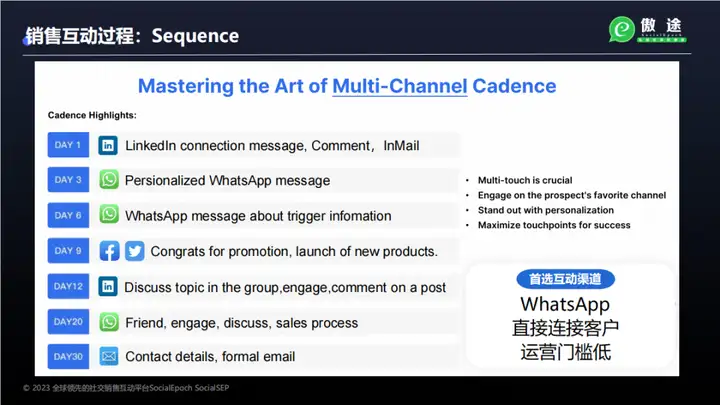
In the global expansion process of cross-border sales and B2 large C-type (automobile, real estate, insurance, education, etc.) enterprises, in addition to the common digital marketing (delivery), platform marketing, event marketing (offline exhibitions) and content marketing, there is also a batch marketing method that can be quickly copied: database marketing.
Database marketing has been around for a long time. A classic example is that many companies conduct secondary customer recall through various methods such as telemarketing/text messages/emails based on the accumulation of historical customer data. At present, due to the instant messaging characteristics of social networks, many companies' database marketing is also based on platforms such as WeChat/WhatsApp.
It is difficult to grow incremental customers, the value of existing customers needs to be tapped urgently, and the efficiency of business transformation needs to be improved. Under this situation, database marketing can open up a new path for marketing and sales transformation for enterprises.
01 Where does the data for database marketing come from?
Generally speaking, enterprise data will come from three aspects: First-party data: As the name suggests, it is data collected directly from the audience (including customers, website visitors and social media followers). Relatively speaking, these data are very accurate customer groups, or customers who have already made transactions. The secondary marketing value is extremely high, and the customer portrait system will be very complete. For many international trading companies, the historical customers of the enterprise's independent website are the first-party data.
Second-party data: In short, it is other people's first-party data, such as data exchanged by partners, enterprise resource replacement, etc. It is also a common source of data in the joint marketing process of enterprises.
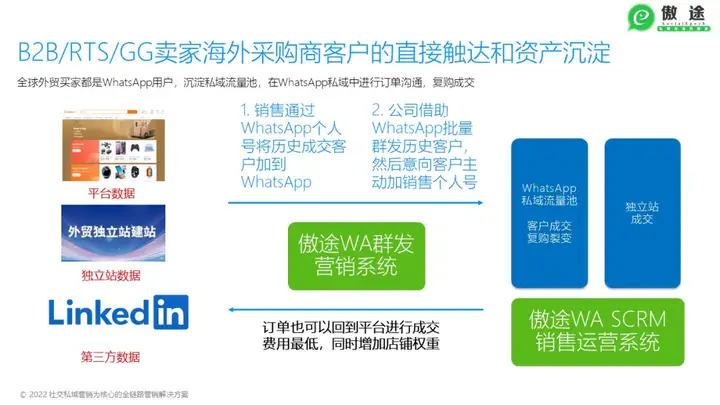
Third-party data: Generally, data purchased by enterprises from external sources, mainly data sold by some platforms after integrating first-party data. For example, overseas platforms such as Zoominfo/Rocketreach/FlashIntel are all overseas compliant and effective third-party data platforms. Enterprises can directly obtain data from here or complete customer portrait information.
Enterprises' database marketing basically starts from mining the value of data in these three aspects.
02 How to use third-party data platforms
Third-party data platforms have become the choice for enterprises to quickly expand and find large amounts of data for marketing. On the one hand, many third-party data platforms have also enriched customer data: taking Rocketreach as an example, multiple tags can be filtered and searched based on keywords to find a large number of suitable target customers and lock in characteristic portraits.
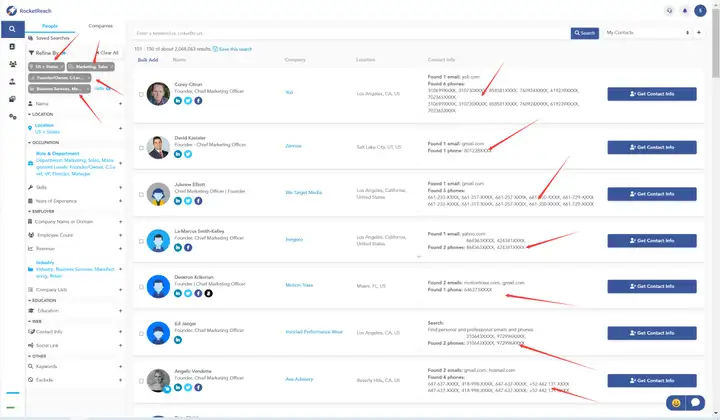
Everyone will display part or all of their personal information on public platforms (mainly social media, self-media, etc.). By collecting and supplementing this information, third parties can build comprehensive and rich portrait information for customers. For enterprises, they can use this information to complete existing customer portraits.
Search and completion have also become the main ways for many companies to use third-party data platforms.
03 How to market effectively after obtaining data
After obtaining the data, every company must market and convert as soon as possible. Based on practical experience, SocialEpoch recommends that you take two steps:
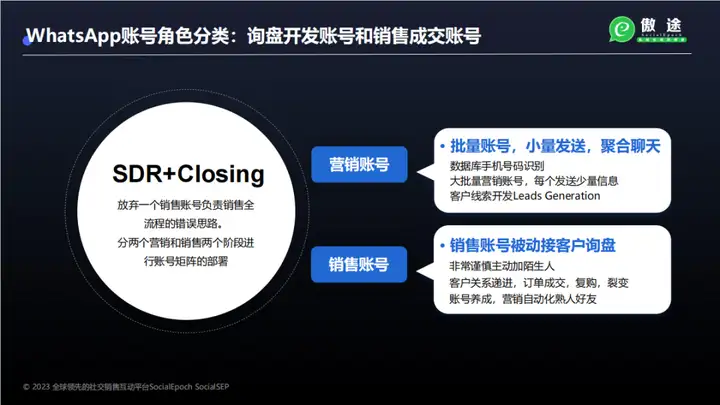
The first step: perform bulk messaging and aggregate chat orders, and SDR quickly selects effective customers.
Through forms such as WhatsApp matrix bulk messaging, combined with customer portrait needs and appropriate copywriting, classified and grouped bulk messaging can be reached. Bulk messaging can be in the form of aggregated chat orders based on a personal account matrix. The copy can be quickly released without review, the reach and open rate is guaranteed, and the reply information is aggregated to facilitate rapid communication.
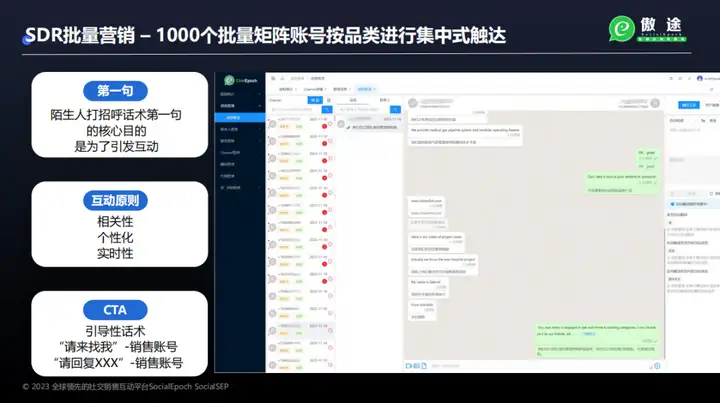
Copywriting content is a technical job. After our repeated polishing and refinement, the reply rate of WhatsApp bulk messaging can be as high as 20%~30%. Here, through a large number of bulk messaging and aggregated chat orders through the personal account matrix, enterprises can communicate with intended customers as soon as possible about their initial needs, complete the SDR communication link, and pave the way for subsequent transactions.
Step 2: Precipitate and refine the customer-owned channel for selling personal accounts.
The first step above is to complete the communication and confirmation of customer intentions. The next step is to have one-to-one intensive communication between sales and customers, to gain a deep understanding of customer needs and portraits, and to promote conversion, repurchase and fission. This step is also the owned-channel marketing link we have been talking about. After accumulating customers, we will continue to refine operations and tap into the lifetime value and social value of customers.
04 Suitable scenes and categories
For cross-border sales B2B and B2 large C-type global expansion enterprises (education, real estate, finance, insurance, automobiles, etc.), database marketing + WhatsApp SDR screening + WhatsApp sales refined communication are more suitable. Because such categories or services generally have the characteristics of long customer cycle and high customer price, customers will not make a quick purchase decision in the short term. Before customers convert, they need to go through multiple stages such as early intention communication, refined sales contact, internal decision-making considerations, transaction conversion, and even repurchase recommendations. Enterprises need to send the right information to the right people at the right time, control the pace of communication, and promote marketing conversions for thousands of people.